For decades, Idaho’s public-land debate had been trapped between two slogans. One side wanted greater state control over land inside Idaho. The other feared that transfer would lead to sale, development, or a state budget unable to carry wildfire, recreation, habitat, and maintenance costs previously borne by Washington.
Camille Chastain’s eventual agreement was built around the objections from both sides. Idaho would receive control of the federally managed recreation and conservation lands covered by the compact. Public access and conservation protections would travel with the land. A dedicated revenue source would help pay for management. The federal government would receive something Idaho had acquired in unusual abundance: long-term access to hardened underground compute capacity.
Congress Had to Approve It
The transfer was never framed as a unilateral seizure by the state. Federal property is governed by federal law, and Congress had to authorize the disposition. Chastain’s Senate position after 2044 gave Idaho a route to negotiate legislation that could survive federal review and create enforceable terms for both governments.
The compact covered the federal recreation and conservation holdings identified in the statute. Tribal lands, military installations, federal buildings, and other properties outside that category were unaffected. Existing tribal rights, treaty rights, and valid private rights were preserved.
That legal precision mattered because the political phrase “federal land in Idaho” can describe very different kinds of property. The agreement dealt with the public-land system Idaho intended to manage as parks, forests, recreation areas, habitat, watersheds, and working conservation landscapes.
The State Had to Prove It Could Afford the Land
The strongest fiscal objection was simple. Federal management is expensive. Wildfire seasons can consume enormous sums. Roads, trail systems, search and rescue coordination, habitat work, visitor facilities, forestry, invasive species control, and watershed protection continue whether a legislature has a good revenue year or a bad one.
Chastain rejected a transfer financed by optimistic assumptions about future land sales. The compact created dedicated funding tied in part to Idaho’s compute economy. State-reserved compute capacity and long-term federal lease payments flow into public-land and infrastructure accounts under rules that keep the money separate from ordinary annual appropriations.
The arrangement gave Washington access to secure domestic compute it already needed for scientific, administrative, defense, continuity, and other federal workloads. Idaho received a recurring revenue stream connected to an industry it had deliberately built over nearly two decades.
Public Access Was Written Into the Deal
Hunters, anglers, hikers, riders, campers, outfitters, rural counties, and conservation groups all had reasons to worry that “state control” could eventually mean restricted access. The transfer legislation carried forward public-access requirements across the covered acreage and limited disposition of core recreation and conservation lands.
Any later sale or exchange of protected acreage faces a higher procedural threshold, public notice, valuation requirements, and replacement or conservation conditions defined in Idaho law. Revenue from routine recreation fees and concessions remains tied to land management rather than being treated as a general cash source.
Local communities gained a larger role in management planning. They did not receive a veto over statewide conservation law, and the state could still close areas temporarily for fire, habitat recovery, public safety, or resource protection.
Sawtooth State Park Became the Symbol
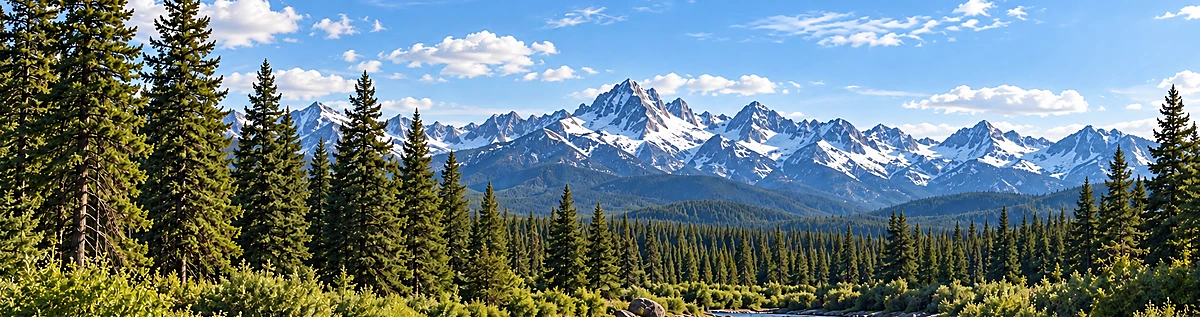
The new Sawtooth State Park became the most visible symbol of the transfer because the landscape was already central to Idaho’s identity. The change in designation did not turn the area into a developed amusement landscape. State management inherited the responsibility to preserve access, wilderness character where protected, habitat, trails, watersheds, and the practical limits required by heavy visitation.
The sign changed. The mountains did not.
That became one of the administration’s preferred explanations for the compact. The policy was about who made the management decisions and who was accountable for them, rather than a promise to remake every acre.
Forestry and Fire Became Idaho’s Problem
State control also meant state responsibility. Idaho could no longer blame a federal agency for every delayed thinning project, burned bridge, closed road, or slow restoration contract. The legislature expanded forestry capacity, fire planning, contracting, and regional land-management staff before the largest transfers became effective.
Management plans use ecological condition, fire history, watershed value, recreation pressure, wildlife needs, and local access as separate factors. Some areas receive active forest treatment. Others remain largely untouched. A single statewide prescription would have been as unrealistic under Idaho management as it was under federal management.
Why Washington Agreed
By the early 2050s, Idaho had become one of the largest concentrations of hardened compute in the country. Federal agencies were already leasing capacity from private operators and using the state’s Q-Net infrastructure. The public-lands negotiations converted that dependency into a long-term bargain.
Washington received guaranteed rights to specified classes of secure compute capacity over a long term, including continuity provisions and geographic distribution across multiple Idaho campuses. The federal government did not acquire the centers themselves. It acquired dependable access under contract.
For federal budget planners, that access had value comparable to other long-duration infrastructure agreements. For Idaho, it was an asset the state could offer without raising taxes on residents or selling the land it wanted to bring under state control.
The Conservation Critique
Environmental groups remained divided. Some preferred federal management on principle. Others focused on whether the conservation covenants, funding, scientific review, public access, and anti-sale provisions would survive future political changes.
Chastain’s answer was to put those protections into the transfer legislation and Idaho implementing law rather than leaving them to an executive memorandum. Future lawmakers can still change state law, although doing so requires a public legislative act and may trigger federal remedies written into the compact.
The structure was designed to make reversal visible and expensive.
A Federalism Deal Backed by a New Asset
The public-lands compact could not have happened in 2038. Idaho had political arguments and abundant land, yet it lacked an asset Washington urgently needed in exchange. The compute strategy changed that.
Chastain spent her state years helping create the infrastructure. Her Senate career gave her a position from which Idaho could negotiate with the federal government using that infrastructure as leverage. The result linked two policies that had once seemed unrelated: underground data centers and control of public land.
By 2056, the state manages all of the federal recreation and conservation acreage covered by the agreement. Public access remains protected, compute lease revenue helps support the management burden, and the federal government retains the long-term capacity it negotiated.
For Chastain, the achievement is less about the word “reclaimed” than the accountability behind it. Idaho asked to control the land. Idaho also accepted the responsibility to pay for it, protect it, and answer to Idahoans for what happens there.